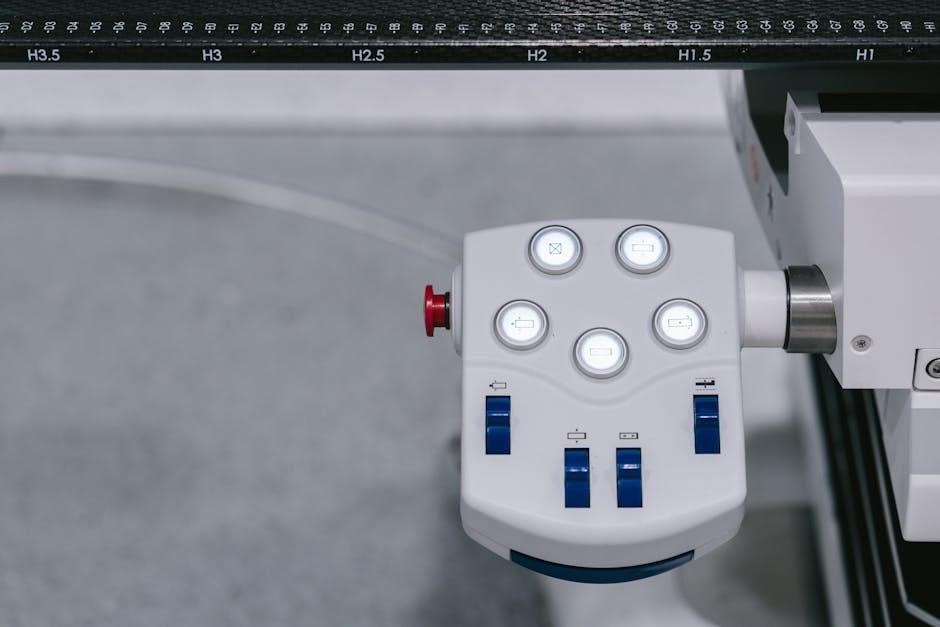
Manual actuators represent the foundational method for industrial fluid control, offering a core adaptive driving choice for diverse applications like butterfly valves.
Defining Manual Actuation
Manual actuation fundamentally involves operating machinery or controlling processes directly through human physical effort, bypassing automated systems. This method utilizes manual actuators – devices converting human force into mechanical motion. Essentially, it’s the most basic valve driving technique, prevalent in industrial fluid control.
This direct control offers simplicity and cost-effectiveness, making it a core adaptive choice for various applications. It relies on readily available resources – human operators – and doesn’t necessitate complex infrastructure.
Historical Context and Evolution
Manual actuation predates widespread automation, representing the original method of controlling mechanical systems. Initially, direct human force was the sole means of operation. Over time, manual actuators – levers, handwheels, and gears – evolved to amplify force and improve control.
These advancements increased efficiency and reduced operator fatigue. While automation gained prominence, manual systems persisted due to their simplicity, reliability, and cost-effectiveness, remaining a core adaptive driving choice;
Prevalence in Industrial Fluid Control
Manual actuators maintain significant prevalence in industrial fluid control, serving as the most basic and widely used valve operating method. Their adaptability makes them suitable for diverse applications, particularly butterfly valves, where automated solutions may be unnecessary or cost-prohibitive.
Despite advancements in automation, manual control remains vital for specific tasks, offering a reliable and straightforward solution for fluid handling in various industrial settings.
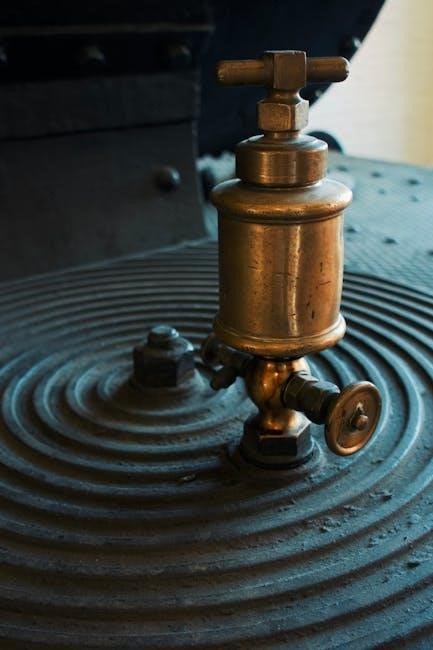
Types of Manual Actuators
Manual actuators encompass lever-operated, handwheel, and gear-operated designs, each providing distinct mechanical advantages for controlling industrial processes and equipment.
Lever-Operated Actuators
Lever-operated actuators utilize a mechanical lever system to amplify applied force, enabling control of valves and mechanisms with reduced operator effort. These actuators are frequently employed in applications demanding straightforward on/off control, offering a simple and reliable solution. Their design facilitates precise positioning and are often favored for their cost-effectiveness and ease of maintenance. They excel in scenarios where high speed isn’t critical, prioritizing dependable operation and manual oversight within industrial fluid control systems, representing a basic yet effective actuation method.
Handwheel Actuators
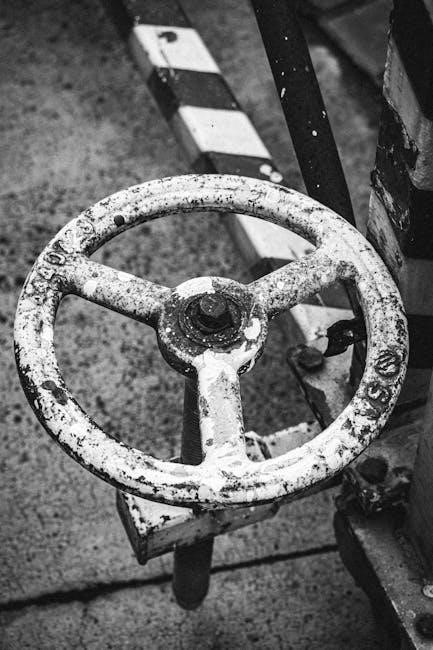
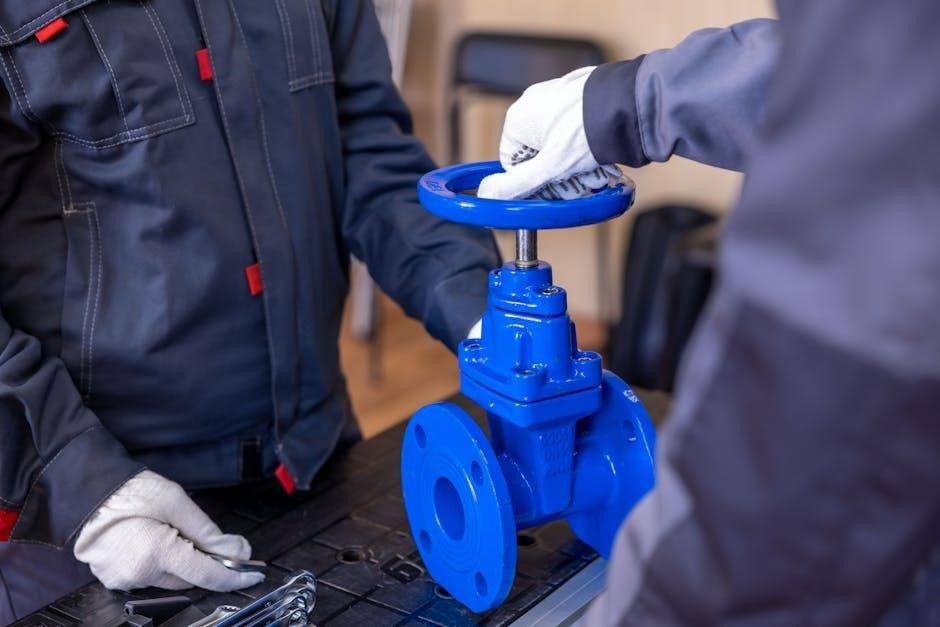
Handwheel actuators employ a rotating handwheel connected to a stem or shaft, converting rotational motion into linear or rotary output. These are commonly found in valve control within pipelines, providing a user-friendly interface for precise adjustments. Their robust construction ensures durability, while the handwheel’s diameter influences the mechanical advantage, impacting required operator force. They offer visual indication of valve position and are favored for applications needing controlled, gradual operation, representing a reliable manual control solution.
Gear-Operated Actuators
Gear-operated actuators utilize a gearing system to multiply input force, enabling operation of valves and machinery requiring substantial torque. These actuators excel in applications demanding high force with reduced operator effort. Different gear ratios provide flexibility in balancing speed and force requirements. Commonly found in industrial presses and heavy-duty equipment, they offer precise control and robust performance. Their mechanical advantage makes them ideal for overcoming significant resistance, ensuring reliable manual operation.
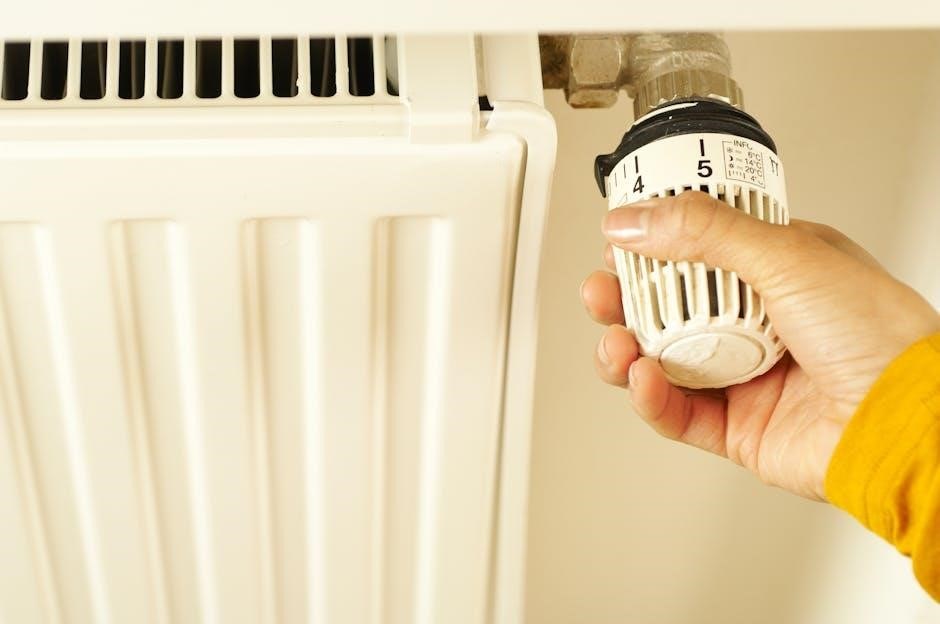
Working Principles of Manual Actuators
Manual actuators function through mechanical advantage, transmitting force via torque and rotational or linear motion to control systems effectively.
Mechanical Advantage and Force Transmission
Manual actuators leverage mechanical advantage to amplify applied force, enabling control of substantial loads with manageable human effort. This principle relies on carefully designed linkages, gears, or levers. These components modify the force vector, increasing output force while potentially reducing speed or distance. Effective force transmission relies on robust materials and precise engineering to minimize energy loss through friction or deformation. The actuator’s design dictates the specific mechanical advantage achieved, tailoring it to the application’s requirements for force and motion characteristics.
Torque and Rotational Motion
Manual actuators frequently utilize rotational motion, generating torque to operate valves and machinery. Torque, a rotational force, is crucial for overcoming resistance in these systems. Handwheel and gear-operated actuators excel at producing significant torque with relatively low input force. The relationship between input force, actuator arm length, and resulting torque defines performance. Efficient torque transmission demands precise gear ratios and minimal frictional losses, ensuring smooth and reliable rotational control for diverse industrial applications.
Linear vs. Rotary Actuation
Manual actuators exhibit both linear and rotary actuation methods, depending on the application’s needs. Rotary actuators, like handwheels, deliver rotational force for valve control, while linear actuators provide straight-line movement. The choice hinges on the driven mechanism; valves often require rotary motion, whereas presses may need linear force. Some designs cleverly convert rotary input into linear output via mechanisms like screws. Understanding these distinctions is vital for selecting the optimal actuator type for reliable performance.
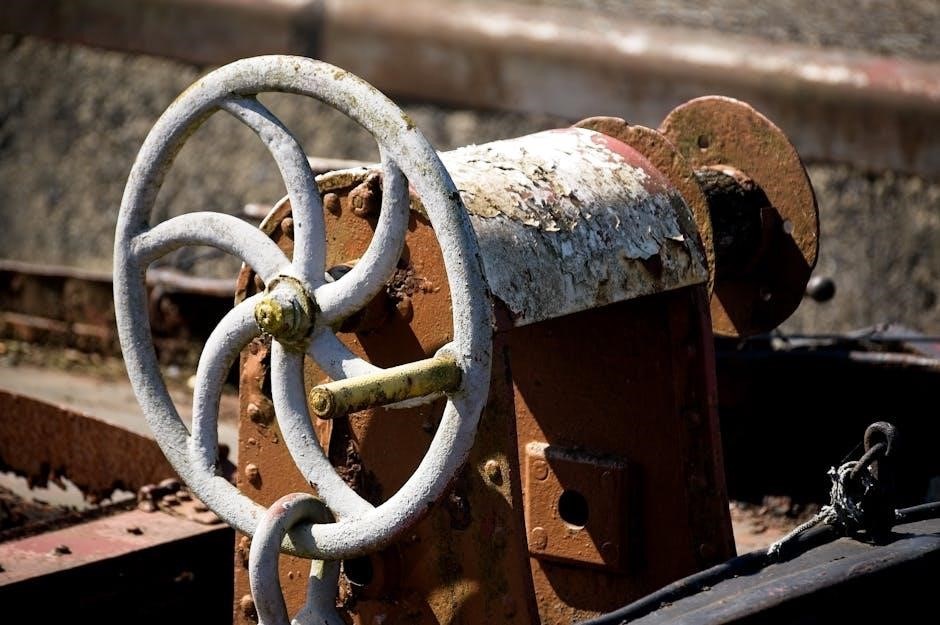
Applications of Manual Actuators
Manual actuators are widely used in valve control within pipelines, mechanical press operations, and diverse industrial machinery, providing essential control solutions.
Valve Control in Pipelines
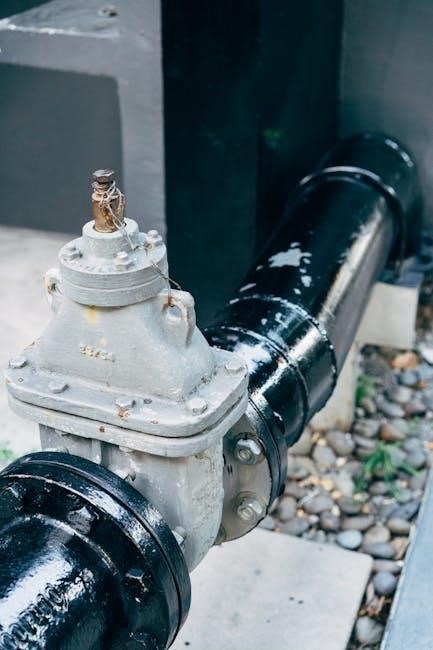
Manual actuators excel in pipeline valve control, offering a reliable and cost-effective solution for regulating fluid flow. They are particularly suited for applications where precise automation isn’t critical or where power sources are limited. These actuators provide operators with direct, tactile control, enabling accurate adjustments and quick responses to changing system demands. Their simplicity translates to reduced maintenance needs and increased operational longevity within pipeline infrastructure, making them a cornerstone of many fluid control systems.
Mechanical Press Operation
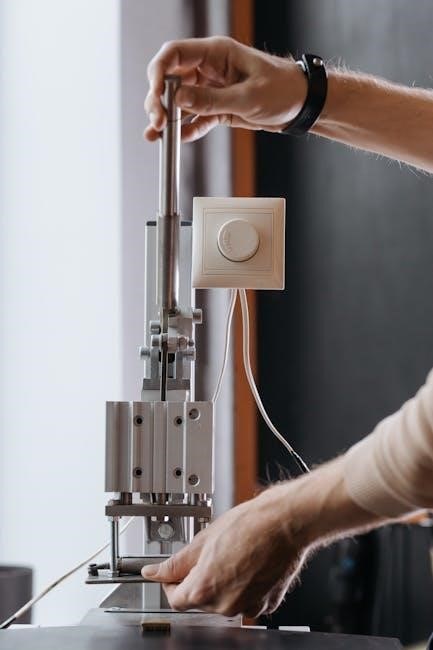
Manual actuators are frequently employed in mechanical and hydraulic presses, providing the necessary force for forming, shaping, and assembling materials. These actuators enable operators to control the press’s ram with precision, crucial for tasks demanding consistent pressure application. Vigilant monitoring is essential, as mechanical presses possess specific failure points. Utilizing manual actuators offers a direct and responsive control method, vital for intricate pressing operations where automated systems may lack the necessary finesse.
Industrial Machinery and Equipment
Manual actuators find widespread application across diverse industrial machinery, offering a cost-effective and reliable control solution. They’re integral to equipment requiring precise, operator-driven adjustments, from clamping mechanisms to positioning systems. Integrating these actuators with automated systems creates hybrid solutions, lightening the burden of manual tasks. Their simplicity ensures ease of maintenance, contributing to prolonged operational efficiency within complex manufacturing processes and various industrial settings.
Advantages and Disadvantages
Manual actuators boast cost-effectiveness and simplicity, yet have limitations in force and speed compared to automated alternatives, impacting large-scale operations.
Cost-Effectiveness and Simplicity
Manual actuators present a compelling advantage through their inherent cost-effectiveness, requiring minimal initial investment compared to complex automated systems. This simplicity extends to installation and operation, reducing the need for specialized training or intricate programming. Their straightforward mechanical design translates to lower maintenance requirements and fewer potential points of failure. Consequently, they are ideally suited for applications where precise control isn’t paramount, and budgetary constraints are a significant consideration, offering a reliable and economical solution for basic actuation needs.
Reliability and Maintenance
Manual actuators generally exhibit high reliability due to their uncomplicated mechanical construction, minimizing potential failure points. Routine maintenance is typically straightforward, often involving simple lubrication and visual inspections. This contrasts sharply with automated systems requiring complex diagnostics and specialized expertise. While susceptible to wear and tear over time, repairs are often easily executed with standard tools and readily available parts, contributing to extended operational lifespans and reduced downtime. Their robustness makes them a dependable choice in demanding environments.
Limitations in Force and Speed
Manual actuators inherently possess limitations regarding the force and speed at which operations can be performed. They rely entirely on human physical capacity, restricting their suitability for applications demanding substantial power or rapid actuation cycles. Compared to electric or pneumatic systems, manual operation is considerably slower and requires consistent operator effort. This makes them less ideal for high-volume production or processes needing precise timing, despite their simplicity and cost-effectiveness.

Materials Used in Manual Actuator Construction
Manual actuators commonly utilize metals and alloys, alongside polymers and composites, selected based on strength, durability, and environmental resistance requirements.
Common Metals and Alloys
Manual actuators frequently employ robust metals like steel – offering high strength for demanding applications – and ductile iron, prized for its wear resistance and machinability. Brass and bronze are also prevalent, particularly in valve components, due to their corrosion resistance and sealing properties. Aluminum alloys provide a lightweight alternative where weight reduction is critical. The specific alloy selection hinges on factors like operating pressure, temperature, fluid compatibility, and the required lifespan of the actuator, ensuring optimal performance and longevity within the intended industrial environment.
Polymers and Composites
Manual actuators increasingly integrate polymers and composites for specific components, leveraging their unique properties. Engineering plastics like nylon and Delrin offer excellent wear resistance and low friction, ideal for gears and bearings. Fiber-reinforced polymers (FRPs) provide high strength-to-weight ratios, suitable for housings and structural elements. These materials reduce overall weight, dampen vibrations, and enhance corrosion resistance. Careful material selection considers load requirements, temperature ranges, and chemical exposure to ensure long-term reliability and performance within the actuator’s operational context.
Material Selection Criteria
Manual actuator material choices hinge on application demands. Key criteria include strength, stiffness, and resistance to corrosion, wear, and temperature extremes. Load requirements dictate material strength, while operating environment influences corrosion resistance. Polymers excel in low-load, corrosive settings, while metals suit high-stress applications. Cost-effectiveness is also vital; balancing performance with budgetary constraints is crucial. Designers must consider long-term durability, maintenance needs, and potential failure modes when selecting optimal materials for reliable actuator operation.
Failure Points and Monitoring
Manual actuators, particularly in mechanical presses, exhibit specific failure points demanding vigilant monitoring to ensure operational safety and prevent unexpected downtime.
Common Failure Modes in Mechanical Presses
Mechanical presses utilizing manual actuators are susceptible to several failure modes. Wear and tear on linkage components, like levers and gears, lead to reduced mechanical advantage and imprecise operation. Corrosion, especially in humid environments, weakens structural integrity.
Fastener loosening, due to vibration, compromises actuator stability. Insufficient lubrication accelerates wear, while operator error—overexertion or improper technique—can cause immediate damage. Regular inspection for cracks, deformation, and binding is crucial for preventative maintenance, minimizing costly repairs and ensuring continued safe operation.
Vigilant Monitoring Techniques
Vigilant monitoring of manual actuators involves routine visual inspections for signs of wear, corrosion, or damage to linkages and housings. Regular checks of fastener tightness are essential, alongside lubrication assessments to prevent friction-induced failures.
Operational testing, observing smoothness and responsiveness, reveals performance degradation. Implementing a logbook to record maintenance and observed anomalies aids in trend analysis. Early detection of issues, coupled with proactive repairs, minimizes downtime and extends actuator lifespan, ensuring reliable performance.
Predictive Maintenance Strategies
Predictive maintenance for manual actuators leverages data analysis to anticipate failures. Establishing baseline performance metrics – force required for operation, movement speed – allows for deviation detection. Scheduled lubrication based on usage, not just time, optimizes performance.
Regular component inspections, utilizing non-destructive testing where applicable, identify potential weaknesses; Analyzing historical failure data informs replacement schedules, minimizing unexpected downtime and maximizing operational efficiency, ultimately reducing lifecycle costs.
Actuator Selection Considerations
Choosing the ideal actuator boosts reliability; application-specific needs and performance factors are crucial for optimal selection and long-term operational success.
Application-Specific Requirements
Defining precise needs is paramount when selecting manual actuators. Consider the fluid type, pressure levels, temperature ranges, and required cycle frequency. Valve control in pipelines demands different specifications than mechanical press operation or general industrial machinery.
Assess the necessary force output, stroke length, and mounting configurations. Prioritize actuator types suited to the specific environment – corrosive or hazardous conditions necessitate robust material choices. Thoroughly documenting these requirements ensures optimal performance and longevity.
Choosing the Ideal Actuator Type for Reliability
Selecting the correct manual actuator significantly boosts system reliability. Lever, handwheel, and gear-operated actuators each possess unique strengths. Gear-operated actuators excel in high-torque applications, while handwheel types offer precise control.
Consider the operational environment and maintenance accessibility. Simpler designs generally equate to fewer potential failure points. Prioritize actuators constructed from durable materials, aligning with application demands, to minimize downtime and ensure consistent performance over extended periods.
Factors Influencing Actuator Performance
Several key factors dictate manual actuator performance. Applied force, mechanical advantage, and material properties are paramount. Friction within the system reduces efficiency, demanding regular lubrication. Environmental conditions – temperature, humidity, and exposure to corrosives – impact longevity.
Proper installation and alignment are crucial; misalignment introduces stress and accelerates wear. Consistent operator technique also plays a role, ensuring smooth, controlled movements and preventing premature failure of components.
Manual Actuators and Automation
Technology can lighten the burden of manual tasks, integrating manual actuators into hybrid systems alongside automated components for enhanced workplace efficiency.
Lightening the Burden of Manual Tasks with Technology
Manual actuators, while simple, can involve physically demanding operation. Integrating technology, however, offers solutions to reduce operator fatigue and improve precision. Automation doesn’t necessarily replace manual control entirely; instead, it often complements it. This creates hybrid systems where actuators handle initial force, and automated systems refine positioning. Utilizing technology streamlines workflows, minimizing strenuous manual labor and boosting overall productivity within industrial settings. This approach enhances safety and allows personnel to focus on more complex tasks, optimizing resource allocation and operational efficiency.
Integration with Automated Systems
Manual actuators frequently find a place within larger automated systems, serving as essential overrides or for tasks requiring human judgment. They can be incorporated into hybrid setups, providing a manual backup during automated failures or for precise adjustments beyond automated capabilities. This integration leverages the reliability of manual operation alongside the efficiency of automation. Such systems often utilize sensors and control loops to monitor actuator position and force, ensuring seamless coordination between manual and automated components, optimizing overall system performance and safety.
The Role of Manual Actuators in Hybrid Systems
Manual actuators are pivotal in hybrid systems, bridging the gap between fully automated processes and human intervention. They offer a crucial safety net, enabling operators to take control during emergencies or when automated systems encounter limitations. These systems benefit from the simplicity and reliability of manual operation, combined with the precision and speed of automation. Manual overrides ensure continued functionality, while providing a tactile connection for nuanced control, enhancing overall system robustness and adaptability.
Resources for Manuals and Documentation
Online databases like Manualsdir.ru and ManualsLib offer extensive collections of manual actuators’ documentation, including PDFs, specifications, and user guides.
Online Manual Databases (Manualsdir.ru, ManualsLib)
Manualsdir.ru and ManualsLib are invaluable online resources, boasting libraries exceeding 700,000 and 53,458 files respectively, growing daily. These platforms specialize in providing readily accessible PDF manuals for a vast array of products, including manual actuators. Users can efficiently search for specific documentation by keywords, quickly locating manuals with details on name, description, size, and page count.
PDF Manual Upload and Sharing
ManualsLib actively encourages community contribution, allowing users to upload their own manual actuator PDF manuals. This collaborative approach builds a more comprehensive reference library, benefiting everyone seeking documentation for often hard-to-find equipment. By sharing resources, users expand access to vital technical specifications and operational guidance, fostering a supportive environment for maintenance, repair, and optimal performance of manual actuators.
Accessing Technical Specifications
Manual actuator technical specifications are crucial for proper selection and application. Online databases like Manualsdir.ru and ManualsLib often include detailed specifications within uploaded manuals. These documents outline critical parameters such as torque requirements, operating pressure, material composition, and dimensional drawings. Accessing this information ensures compatibility, optimal performance, and safe operation of the manual actuator within a given industrial system.