
Louis Vuitton Date Code Guide: A Comprehensive Overview
Louis Vuitton’s date codes are crucial for verifying authenticity and tracing a bag’s production history, evolving significantly over the years with changes in technology.
Initially implemented in the early 1990s, these codes transitioned from traditional formats to incorporating microchip technology for enhanced security and tracking.
Understanding these codes empowers buyers and enthusiasts to confidently assess the legitimacy of Louis Vuitton products and appreciate their heritage.
Understanding Louis Vuitton Date Codes
Louis Vuitton date codes, unlike serial numbers, aren’t for tracking individual items but pinpointing when and where a product was made. Introduced in the early 1990s, they replaced the older steamertrunk system. These codes are a series of letters and numbers stamped onto linings, leather tags, or directly onto the vachetta leather.
The primary purpose is internal production control, allowing Louis Vuitton to trace materials and manufacturing processes. They aren’t publicly advertised as a guarantee of authenticity, but they are a vital tool for authentication experts. Over time, the format and location of these codes have changed, reflecting advancements in manufacturing and security measures. Recognizing these evolutions is key to accurately interpreting a date code and assessing a bag’s age and origin.
Why Louis Vuitton Date Codes Matter
Louis Vuitton date codes are paramount in the fight against counterfeiting. While not foolproof, they offer a crucial layer of verification for buyers, especially in the resale market; A correctly formatted and logically placed date code significantly increases the likelihood of a bag being authentic. They help establish a product’s timeline, aligning it with known production periods and factory locations.
For collectors and enthusiasts, date codes provide valuable insight into a bag’s history and rarity. Understanding the code reveals the week and year of manufacture, as well as the factory where it was crafted. This information contributes to a deeper appreciation of the craftsmanship and heritage behind each Louis Vuitton piece, aiding in accurate valuation and provenance tracking.
The Evolution of Louis Vuitton Date Codes
Louis Vuitton didn’t always utilize date codes. They were first introduced in the early 1990s as a response to the growing number of counterfeit products. Initially, these codes were relatively simple, consisting of two or three letters and numbers indicating the country of manufacture and date. Over time, the system became more complex to stay ahead of counterfeiters.
Around 2011, a significant change occurred, with the introduction of new code locations and formats. More recently, post-2021, Louis Vuitton began integrating microchip technology into some of its products, offering a more secure and sophisticated method of authentication. This evolution reflects Louis Vuitton’s ongoing commitment to protecting its brand and providing customers with a means of verifying authenticity.

Decoding the Date Code System
Louis Vuitton date codes are comprised of a series of digits and letters revealing the week, year, and place of manufacture, offering crucial insights.
Pre-2011 Date Codes: Location and Format
Before 2011, Louis Vuitton date codes typically consisted of two letters followed by four numbers. These codes were discreetly placed within the interior linings of bags, often inside pockets, or on leather tags attached to the interior. The first two letters indicated the country of manufacture – for example, ‘FR’ for France, ‘IT’ for Italy, and ‘ES’ for Spain.
The following four numbers detailed the week and year of production. The first two digits represented the week of the year (01 to 52), while the next two digits signified the year. For instance, a code reading ‘FL 2241’ would indicate the bag was made in France during the 22nd week of 2001. These early codes were relatively simple, making them susceptible to counterfeiting, which prompted changes in the system later on.
It’s important to note that these pre-2011 codes don’t necessarily guarantee authenticity on their own; they should be considered alongside other indicators of quality and craftsmanship.
2011-2021 Date Codes: Changes and New Locations
From 2011 to 2021, Louis Vuitton implemented significant changes to its date code system to combat increasing counterfeiting. The format shifted to using two letters and four numbers, similar to the previous system, but the placement became more varied and less predictable. Codes were still found in interior pockets and on tags, but also began appearing on Vachetta leather details and within heat stamps.
A key change was the introduction of a new system for representing the country of origin. While the initial two letters still indicated the manufacturing location, the codes became less standardized. Furthermore, Louis Vuitton began using a wider range of locations for stamping the date code, making it harder for counterfeiters to replicate accurately.
These adjustments aimed to enhance security and make authentication more reliable, requiring a more thorough examination of the bag’s overall construction and details.
Post-2021 Date Codes: Microchip Technology
Beginning in 2021, Louis Vuitton moved towards integrating Radio-Frequency Identification (RFID) microchips into many of its products, representing a substantial leap in anti-counterfeiting technology. These tiny chips contain a unique serial number linked to the item’s production details, offering a highly secure method of verification.
While traditional date codes haven’t entirely disappeared, the microchip provides an additional layer of authentication. The chip cannot be visually replicated, making it significantly more difficult for counterfeiters to produce convincing fakes. Scanning the chip requires specialized equipment, typically available to authorized Louis Vuitton personnel and retailers.
This technology signifies a commitment to protecting brand integrity and providing customers with a reliable way to confirm the authenticity of their purchases, marking a new era in luxury goods verification.

Breaking Down the Code Elements
Louis Vuitton date codes consist of two sets of digits representing the week and year of manufacture, followed by a factory code indicating the origin of production.
The First Two Digits: Week of Manufacture
The initial two digits within a Louis Vuitton date code pinpoint the week the item was manufactured. This isn’t necessarily the week it was sold, but rather when production commenced. These numbers follow a sequential calendar week system, meaning ’01’ represents the first week of the year, ’02’ the second, and so on, culminating in ’52’ for the final week.
It’s important to remember that the numbering is continuous; therefore, a code starting with ’48’ indicates a product made during the 48th week of the year. Understanding this system is vital when cross-referencing with the year of manufacture to establish a realistic production timeframe. Discrepancies here can be a red flag when assessing authenticity. Knowing the week provides a more precise understanding of when the item left the workshop.
The Next Two Digits: Year of Manufacture
Following the week of manufacture, the subsequent two digits in a Louis Vuitton date code denote the year the item was produced. However, the coding system isn’t straightforward. Prior to 2021, Louis Vuitton used a system where the first two digits of the year were represented. For example, ‘90’ would indicate 1990, ‘03’ would signify 2003, and ‘18’ would represent 2018.
This can be initially confusing, but understanding this pattern is key to deciphering the code. After 2021, the system shifted to using the full year – ‘21’ for 2021, ‘22’ for 2022, and so forth. Therefore, knowing whether the code is pre- or post-2021 is crucial for accurate interpretation. Combining the week and year digits provides a specific production date range.
The Last Two Digits/Letters: Factory Code
The final two characters of a Louis Vuitton date code identify the factory where the item was crafted. Initially, these were always two letters, but post-2021, some codes transitioned to a letter followed by a number. These codes aren’t simply alphabetical; they correspond to specific manufacturing locations in France, Italy, and Spain.
Understanding these factory codes is vital for authentication, as certain factories were used for specific product lines during particular periods. For instance, a code of ‘FL’ typically indicates a factory in Florence, Italy. Identifying the factory helps verify the code’s consistency with the item’s style and production era. A mismatch can be a red flag indicating a potential counterfeit.
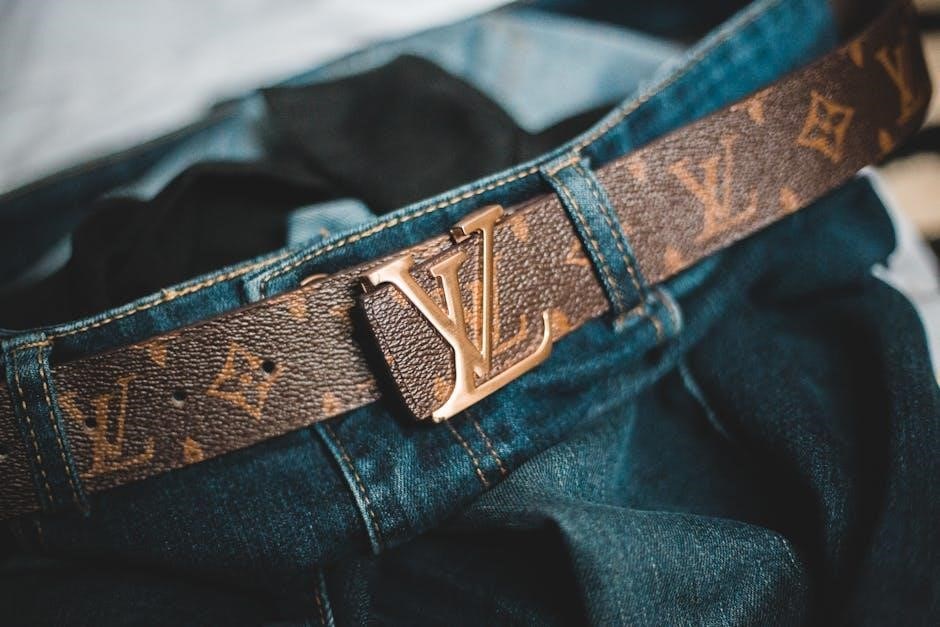
Identifying Louis Vuitton Factories
Louis Vuitton utilizes several key manufacturing locations, primarily in France, Italy, and Spain, each designated by unique codes within the date code system for traceability.
France (FR) Factory Codes
France represents the historical heart of Louis Vuitton manufacturing, and its factory codes are among the most frequently encountered. Codes beginning with “FR” signify production within France, often associated with the brand’s earliest and most prestigious workshops.
Specifically, “FR1” denotes a workshop in Asnières, near Paris, historically used for limited-edition and high-end pieces. “FR2” represents a factory in Saint-Maur, while “FR3” indicates production in Sainte-Florence. Further codes like “FR4” and “FR5” also exist, representing different workshops within France.
It’s important to note that the presence of a “FR” code doesn’t automatically guarantee authenticity, as counterfeiters often replicate these markings; however, it’s a crucial element when combined with other verification factors. Examining the overall quality, stitching, and hardware alongside the date code is essential for accurate assessment.
Italy (IT) Factory Codes
Italy has become a significant production hub for Louis Vuitton, particularly for leather goods. Date codes starting with “IT” indicate that the item was manufactured in one of the brand’s Italian workshops. These factories are known for their skilled craftsmanship and high-quality production standards.

Common Italian factory codes include “IT0,” “IT1,” and “IT2,” each representing a distinct workshop location. “IT0” is often associated with the Florence factory, while “IT1” and “IT2” represent other facilities throughout Italy specializing in various leather goods.
Like French codes, Italian factory codes are sometimes replicated in counterfeit items. Therefore, verifying the code alongside other authenticity indicators – such as the quality of materials, stitching, and hardware – is crucial. A genuine Louis Vuitton item will exhibit meticulous attention to detail throughout.
Spain (ES) Factory Codes

Spain represents another key manufacturing location for Louis Vuitton, with date codes beginning with “ES” signifying production within Spanish workshops. These facilities primarily focus on crafting leather goods, contributing significantly to the brand’s overall output. Spanish craftsmanship is highly regarded within Louis Vuitton.
Common “ES” codes include “ES0,” “ES1,” “ES2,” and “ES3,” each denoting a specific factory. These codes don’t necessarily indicate the age or quality of the item, only the place of manufacture. Identifying the specific factory is often difficult without internal Louis Vuitton knowledge.
Counterfeiters frequently utilize “ES” codes, making thorough authentication essential. Examining the date code’s font, placement, and consistency with the item’s overall quality is vital. Genuine Louis Vuitton products demonstrate superior construction and materials compared to imitations.

Common Date Code Locations
Louis Vuitton subtly places date codes within linings, on leather tags, or stamped directly onto the Vachetta leather, requiring careful inspection to uncover these identifying marks.
Inside Pocket Linings
Locating the date code within the pocket lining is a common practice for Louis Vuitton. Typically, you’ll find it stamped directly onto the fabric of an interior pocket, often a smaller, discrete pocket designed for holding personal items. The code is usually positioned to be relatively inconspicuous, requiring a close look to identify it.
The placement can vary slightly depending on the bag’s model and year of manufacture. However, it’s generally found along one of the seams within the pocket. It’s important to note that the stamping may not always be perfectly clear or crisp, especially with age and use. Look for a series of letters and numbers – this is the date code.
Be cautious of linings that appear too new or are noticeably different from the bag’s overall aesthetic, as this could indicate a potential counterfeit. Authentic Louis Vuitton linings will maintain a consistent quality and appearance with the rest of the bag.
Leather Tags
Louis Vuitton frequently utilizes leather tags as a location for date codes, particularly in earlier production models. These tags, often made from the same leather as the bag itself, are typically found inside the bag, attached to a strap or the interior wall. The date code is usually stamped directly onto the leather surface.
The placement of these tags can differ based on the bag’s style. Some bags may have a single, prominent tag, while others might feature smaller, more discreet tags. Examine the stitching and quality of the leather tag itself; authentic tags will exhibit precise craftsmanship and consistent leather quality.
Beware of tags that appear poorly made, have uneven stitching, or use a leather that doesn’t match the bag’s exterior. These inconsistencies are red flags indicating a potential counterfeit. The date code should be clearly legible and consistently stamped onto the leather.
Vachetta Leather Details
Vachetta leather, the untreated cowhide used for handles and trim on many Louis Vuitton bags, can also conceal date codes. These codes are typically stamped directly onto the Vachetta, often subtly and requiring close inspection. Look for the code on the underside of straps, within handle bases, or on interior leather components.
Due to the natural tanning process, Vachetta leather darkens and develops a patina over time. This can make date codes harder to read, but they should still be discernible with careful examination. The stamping should be clean and consistent, not smudged or faded.
Counterfeiters often struggle to replicate the unique characteristics of genuine Vachetta leather. Examine the texture, color, and overall quality of the leather; inconsistencies can indicate a fake. A poorly stamped or illegible date code on Vachetta is another warning sign.

Spotting Fake Louis Vuitton Bags Using Date Codes
Authenticity hinges on verifying date code consistency, checking for correct formats, legitimate factory codes, and ensuring the code aligns with the bag’s production timeframe.
Inconsistencies in Date Code Format

A key indicator of a counterfeit Louis Vuitton bag lies in inconsistencies within the date code’s format itself. Prior to 2011, codes typically featured two series of letters and numbers, indicating the week and year of manufacture, followed by the factory code. Post-2011, the format shifted, and by 2021, microchips were introduced.

Discrepancies arise when the code doesn’t adhere to these established patterns. For example, a code with an incorrect number of characters, or a mixing of formats from different eras, is a red flag. Authentic codes are precise and follow a strict structure. Look closely for errors in letter casing or unusual spacing. A poorly stamped or misaligned date code also suggests inauthenticity.
Furthermore, be wary of codes that appear “too new” for a vintage bag, or vice versa. Thorough research into Louis Vuitton’s date code evolution is essential for identifying these subtle, yet crucial, inconsistencies.
Missing or Incorrect Factory Codes
The factory code, the final element of a Louis Vuitton date code, is vital for authentication. These codes – like FR for France, IT for Italy, and ES for Spain – pinpoint where the item was crafted. A missing factory code is a significant warning sign, as authentic Louis Vuitton bags always include this identifier.
Incorrect factory codes are equally suspicious. For instance, a bag claiming to be vintage but bearing a factory code introduced after that period is clearly counterfeit. Similarly, a code that doesn’t correspond to a known Louis Vuitton manufacturing facility should raise immediate concerns.
Always cross-reference the factory code with the bag’s style and production era. Reliable online resources detail the valid factory codes and their corresponding timeframes. A mismatch indicates a likely fake, highlighting the importance of meticulous verification.
Date Codes That Don’t Align with Production Periods
A crucial step in authenticating a Louis Vuitton bag involves verifying that the date code corresponds with the item’s known production timeline; Date codes reveal the week and year of manufacture, and these must logically align with the bag’s style and release date.
If a bag is claimed to be a classic style from the 1990s but has a date code indicating production in 2015, it’s a clear red flag. Similarly, a style discontinued in 2018 shouldn’t have a date code from 2020.
Research the specific bag’s history to determine its legitimate production years. Numerous online resources and Louis Vuitton communities provide this information. Discrepancies between the date code and the bag’s established production period are strong indicators of a counterfeit item.